Best Scope for the Browning X-Bolt in 2026
By Peter Makulek · Senior Optics Editor · · Live prices from US retailers
Quick answer: for a Browning X-Bolt used for hunting, a 3-12x42 or 4-16x44 scope is the right size, with a 1-inch or 30mm tube. Second focal plane suits a hunting X-Bolt and first focal plane suits the long-range and Pro variants you hold over or dial. Buy bases listed for your exact X-Bolt, and check whether you own the original X-Bolt or the X-Bolt 2 before you order anything.
The X-Bolt is a premium production hunting rifle with a reputation for accuracy, and it is sold in many versions. The Hunter, Medallion, White Gold and Stalker models are made to carry. The Hells Canyon and Mountain models are light and built for mountain work. The Pro, Max and Long Range versions are heavier and aimed at shooters who dial turrets or hold over. Chamberings run from .243 Winchester and .308 Winchester to 6.5 Creedmoor, 6.5 PRC, .300 Winchester Magnum and 7mm Remington Magnum.
That spread is why this question comes up so often. This guide covers how to pick a scope by X-Bolt model, magnification, objective size, focal plane, tube size, eye relief on the magnums, mounting, and a short test routine. Most hunting shots are inside 400 yards, so the picks below come from our live US catalog of in-stock scopes in the 3-6x to 12-18x range that suit an X-Bolt.
Top Picks — Live US Prices
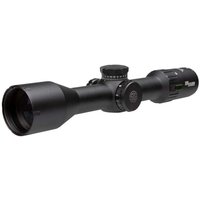
SIG SAUER Whiskey6 Rifle Scope, 3-18x44mm, 30mm Tube, Second Focal Plane, MOA Milling Hunter 2.0, Uncapped Locking Turret, Black, SOW63112
via OpticsPlanet
$899.99
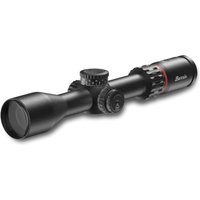
Burris Veracity 3-15x44mm 30mm Tube Rifle Scope, Second Focal Plane, Plex, Black, 200682
via OpticsPlanet
$899.99
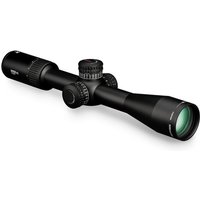
Vortex Viper PST Gen II 3-15x44mm Rifle Scope, 30mm Tube, First Focal Plane, Black, Hard Anodized, Red EBR-7C MOA Reticle, MOA Adjustment, 14.3in, 28.1oz, PST-3156
via OpticsPlanet
$899.00
Buying Advice
Match the scope to the model. A Hunter, Medallion or Stalker X-Bolt is a rifle you will carry through the woods or across a ridge. A 3-12x42 second focal plane scope with a 1-inch tube keeps the weight down, gives you a wide field of view at low power and has enough reach for a careful shot across a field. A Hells Canyon or Mountain model is built to be light, so a lightweight 3-9x40 or 3-12x42 is a better match than a large 30mm scope that adds ounces where you least want them.
The Pro, Max Long Range and Hells Canyon Long Range versions are a different proposition. They are heavier, are often chambered in 6.5 Creedmoor, 6.5 PRC or a magnum, and their owners tend to shoot past 400 yards. A 4-16x44 or 5-25x50 with a first focal plane reticle and turrets you can dial makes sense here. Look for turrets that return to zero after a box test, a parallax adjustment that goes down to at least 50 yards and a reticle you can read at both low and high power.
Choose the focal plane by how you shoot. On a second focal plane (SFP) scope the reticle stays the same apparent size as you zoom, so it stays bold at low power. Any holdover marks are only correct at one power. First focal plane (FFP) scales the reticle with the image, so its mil or MOA marks work at every setting, at the cost of a finer reticle when you are zoomed out. A quarter-MOA click moves the point of impact about 0.26 inch at 100 yards, and a 0.1 mil click moves it 0.36 inch. Pick MOA or MRAD and keep the turrets and the reticle in the same units.
Spend in proportion to the rifle. An X-Bolt is a premium production rifle, and buyers usually accept that the scope is worth real money too. A budget between about $400 and $900 buys clear, bright multi-coated glass, consistent tracking and a reticle worth using. Below about $250 you are likely to see soft edges and turrets that wander. If you already own a scope you like, move it across rather than buy a new one. The best scope is the one that holds zero and that you can see clearly at dusk.
Eye relief matters on the magnum chamberings. A .300 Winchester Magnum or 7mm Remington Magnum X-Bolt kicks harder than a .308 Winchester, and a scope mounted too far back can reach your brow. Look for 3.7 to 4 inches of eye relief or more, mount the scope as far forward as still gives you a full sight picture, and check with your eyes closed as you shoulder the rifle: when you open them you should see the whole image with no black ring. A muzzle brake changes blast but does not change the scope you need.
Tube size is a choice. A 30mm tube carries more internal elevation travel than a 1-inch tube, which helps if you dial far out. It also adds weight and cost. For hunting inside 400 yards a 1-inch tube has plenty of adjustment. A 20 MOA base tilts the scope down, adding about 21 inches of elevation at 100 yards (20 MOA times 1.047 inches). It is worth having if you practice well past 500 yards with a 6.5 PRC or a magnum, and it adds nothing for a deer rifle shot at 200.
Mounting is where the X-Bolt needs one careful look. The X-Bolt has been made in several generations, including the original X-Bolt and the newer X-Bolt 2, and bases, rails and rings are sold for particular models. Do not assume a base made for another rifle will fit, and do not assume the original X-Bolt and the X-Bolt 2 share parts. Buy bases or a rail listed for your exact X-Bolt model and read the listing for the rifle name, and if the seller does not name your model, ask. Then choose rings tall enough for your objective bell so the scope clears the barrel and the bolt handle with the bolt fully cycled.
Test the scope when it arrives. Look at a distant edge in daylight, run the power ring through its range and check the reticle is sharp when you focus the eyepiece. Zero at 100 yards, then run a box test: dial a set number of clicks up, right, down and left, return to zero and confirm the group comes back. Confirm your hold or dial at 200 and 300 yards with the ammunition you will hunt with. An accurate rifle and a good scope remove equipment as a source of error. They do not make a long shot ethical, so shoot only at distances you have practiced from field positions.
Frequently Asked Questions
What is the best scope for a Browning X-Bolt?
For a hunting X-Bolt, a 3-12x42 second focal plane scope. It keeps the rifle light, gives a wide field of view at low power and has enough magnification for careful shots across a field. For the long-range versions, a 4-16x44 or 5-25x50 first focal plane scope suits better.
What scope should I put on an X-Bolt Pro or Max Long Range?
A 4-16x44 or 5-25x50 with a first focal plane mil or MOA reticle, exposed or capped turrets and a parallax adjustment. These rifles are heavier and made for shooting past 400 yards.
Do the X-Bolt and X-Bolt 2 use the same bases?
Do not assume they do. Buy bases or a rail listed for your exact model, and check that the listing names it. If it does not, ask the seller.
Do I need a 30mm tube on an X-Bolt?
Not for hunting inside 400 yards. A 1-inch tube is lighter and has plenty of travel. A 30mm tube is worth it if you dial well past 500 yards or use a 20 MOA base.
FFP or SFP for an X-Bolt?
Second focal plane suits a hunting X-Bolt, since the reticle stays bold at low power. First focal plane suits a Pro, Max or Long Range rifle where you use reticle holds or dial at several magnifications.
How much should I spend on an X-Bolt scope?
Most owners do well between about $400 and $900, which buys clear glass, turrets that return to zero and a reticle worth using. Below about $250 tracking and edge sharpness are where scopes let the rifle down.
How much eye relief do I need on a magnum X-Bolt?
Look for 3.7 to 4 inches or more on a .300 Winchester Magnum or 7mm Remington Magnum, and mount the scope as far forward as still gives a full sight picture.
Is a 20 MOA base worth it on an X-Bolt?
Only if you shoot well past 500 yards and run short of elevation travel. A 20 MOA base adds about 21 inches of elevation at 100 yards. For deer hunting inside 400 yards a standard base is simpler.
Related guides
Best scope for the Bergara B-14 in 2026: Hunter, Ridge and HMR models, 4-16x vs 3-15x, FFP vs SFP, Remington 700 pattern bases and live US picks in stock.
Best Scopes for the Tikka T3x (Lite, Varmint & CTR)Find the best scopes for every Tikka T3x variant—Lite, Varmint, and CTR. We cover mounting quirks, ring heights, rail gaps…
FFP vs SFP Scopes ExplainedFFP vs SFP explained: how reticle subtensions hold at every magnification, which disciplines favor each, and why FFP costs more. A 2026 buyer's guide.
MOA vs MRAD: Which Reticle System Should You Choose?MOA vs MRAD explained for US shooters. Learn what each system means, which suits hunting or long-range PRS, how to convert between them…
Best 6.5 Creedmoor Scopes Under $500 in 2026Find the best scope for 6.5 Creedmoor under $500 in 2026. We cover FFP vs SFP, MOA vs MRAD, long-range picks, and ideal pairings for Tikka, Savage…
Best Scopes for .300 Win Mag in 2026Find the best scopes for .300 Win Mag in 2026. Our US buyer's guide covers magnification, reticles, turrets, and top picks for hunting elk, mule deer…
Not sure which scope is right for you?
Try our AI-powered scope finder — answer a few questions and get personalised recommendations.
Find My Scope →Get a scope tip every day
Follow AiScopes on Facebook for daily buying guides, deals and gear advice.
Follow on Facebook