Best Scope for the Savage 110 in 2026
By Peter Makulek · Senior Optics Editor · · Live prices from US retailers
Quick answer: for a Savage 110 used for hunting, a 3-9x40 or 3-12x42 second focal plane scope is the right match for the lighter models, and a 4-16x44 with finger-adjustable or capped turrets suits the heavier Precision and Tactical rifles. Buy bases listed for your exact 110 model, add good rings, and spend the money on glass rather than on extra magnification.
The Savage 110 is a family of bolt actions rather than one rifle. The same name covers a light Trail Hunter or Ultralight you carry up a mountain, a Hunter or Storm for the deer stand, and heavy-barrel Precision and Tactical rifles built to shoot groups at the range. They are chambered from .223 Remington and .243 Winchester up through .308 Winchester, 6.5 Creedmoor, .300 Winchester Magnum and .338 Lapua Magnum. That spread means there is no single best scope. There is a best scope for how you use your particular 110.
This guide covers how to match the scope to the model, magnification and objective size, first versus second focal plane, tube size, eye relief for harder-kicking cartridges, mounting, and a short test routine. Most hunting shots are inside 300 yards, so the picks below come from our live US catalog of in-stock scopes in the 3-5x to 12-16x range that suit a 110.
Top Picks — Live US Prices
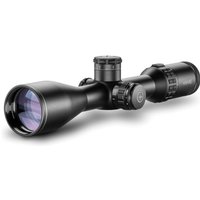
Hawke Sport Optics Sidewinder 30 Rifle Scope, 4-16X50mm, 30mm, SFP, 10x Half Mil Dot Reticle, Black, 17250
via OpticsPlanet
$599.99
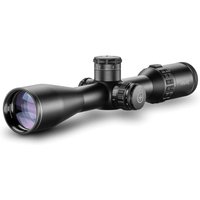
Hawke Sport Optics Sidewinder 30 4.5-14x44mm, 30mm, SFP, 10x Half Mil Dot Reticle, Black, 17140
via OpticsPlanet
$599.99
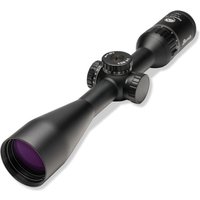
Burris Signature HD Scope 3-15x44 mm Rifle Scope, 1 in Tube, Second Focal Plane, Black, Matte, Red Ballistic E3 Reticle, MOA Adjustment, 200531
via OpticsPlanet
$599.99
Buying Advice
Start with the model. A Trail Hunter, Ultralight or Hunter 110 is a rifle you will carry for hours, and a 30mm, 25-ounce scope turns it into a front-heavy one. A 3-9x40 or 3-12x42 with a 1-inch tube keeps the rifle lively and the cost sensible. A Precision or Tactical 110 is built to be shot from a bench, a bipod or over a pack, so the weight penalty of a 4-16x44 or 5-25x50 scope matters far less. Decide which kind of rifle yours is before you look at a single scope.
For hunting, second focal plane (SFP) is the simple choice. The reticle stays the same apparent size as you change power, so it stays bold at low magnification in dark timber. Any holdover marks are only correct at one power, normally the maximum. That is fine if you hold center on deer inside 300 yards. A first focal plane (FFP) scope scales the reticle with the image, so a mil or MOA grid works at every setting. It is worth having on a Precision 110 that you hold over or dial at different distances, at the cost of a finer reticle when you are zoomed out. Choose FFP for target-style use and SFP for a stand or still-hunting rifle.
Keep the budget in proportion. A 110 is a value-for-money rifle that shoots well, so a scope in the $250 to $600 range makes sense for most buyers. Below about $150 you start to risk soft edges and turrets that do not track. Above $800 you are paying for glass and mechanics that pay off mostly if you shoot past 400 yards. If you bought a package rifle with a scope already mounted, shoot it for a season first. Replace it when you have a specific problem, such as a dim image at dusk, a reticle that disappears against dark timber, or turrets that do not return to zero.
Magnification should match the cartridge and the country. A .243 or .308 on an open field benefits from 9x to 12x for a careful shot. In hardwoods and thick cover, a 3-9x is plenty and a low power setting helps you find a moving deer. If you shoot a 6.5 Creedmoor Precision and enjoy steel at 500 yards, a 4-16x44 or 5-25x50 with parallax adjustment is a natural choice. A quarter-MOA click moves the point of impact about 0.26 inch at 100 yards, and a 0.1 mil click moves it 0.36 inch. Pick MOA or MRAD and keep the turrets and the reticle in the same units.
Recoil and eye relief deserve more attention on the magnum chamberings. A .300 Winchester Magnum or .338 Lapua Magnum 110 kicks hard enough to bring a scope into your brow if it is mounted too far back. Look for 3.7 to 4 inches of eye relief or more, mount the scope as far forward as still gives you a full sight picture, and check the position with your eyes closed as you shoulder the rifle: when you open them you should see the whole image with no black ring. A muzzle brake changes blast and recoil but does not change which scope you need.
Tube size is a choice, not an upgrade. A 30mm tube carries more internal elevation travel than a 1-inch tube and is useful if you dial far out or use a rail with built-in slope. It also adds weight and cost. For hunting inside 400 yards a 1-inch tube has plenty of adjustment. A 20 MOA base tilts the scope down, adding about 21 inches of elevation at 100 yards (20 MOA times 1.047 inches), which keeps your turrets near mid-travel on a long-range 110. Do not buy one unless you will shoot far enough to need it.
Mounting is where careful buyers save themselves trouble. The 110 is sold in several models, in short and long action versions, and some variants are sold with a rail already fitted, so check what is on your rifle before you buy anything. Buy bases or a rail listed for your exact Savage 110 model and action length, and read the listing for the model name rather than assuming a part from another rifle will fit. Then use rings of the right height for your objective bell so the scope clears the barrel and the bolt handle with the bolt fully cycled. Torque the screws to the maker's setting and level the reticle with a plumb line against a fixed vertical edge.
Test the scope when it arrives, not on opening day. Look at a distant edge in daylight, run the power ring through its range and check that the reticle is sharp when you focus the eyepiece. Zero at 100 yards, then run a box test: dial a set number of clicks up, right, down and left, return to zero and confirm the group comes back. Confirm your hold or dial at 200 and 300 yards with the ammunition you will hunt with. A good scope removes equipment as a source of error. It does not make a long shot ethical, so shoot only at distances you have practiced from field positions.
Frequently Asked Questions
What scope is best for a Savage 110 hunting rifle?
A 3-9x40 or 3-12x42 second focal plane scope with a 1-inch tube. It keeps a light 110 well balanced, gives you a wide field of view at low power and has enough magnification for careful shots out to about 300 yards.
What scope should I put on a Savage 110 Precision or Tactical?
A 4-16x44 or 5-25x50 with a parallax adjustment and a first focal plane mil or MOA reticle. These rifles are built to be shot from a bench or a bipod, so scope weight matters less and the extra magnification is useful.
Do I need a 30mm tube on a Savage 110?
Not for hunting inside 400 yards. A 1-inch tube is lighter and has plenty of travel. A 30mm tube is worth it if you dial well past 500 yards or use a 20 MOA base.
Which bases and rings does the Savage 110 need?
Buy bases or a rail listed for your exact Savage 110 model and action length, and check the product listing names it. Some models are sold with a rail already fitted, so look at what is on your rifle first. Choose ring height from your objective bell size.
FFP or SFP for a Savage 110?
Second focal plane suits a hunting 110, since the reticle stays bold at low power. First focal plane suits a Precision 110 or any rifle where you use reticle holds or dial at several magnifications.
How much should I spend on a scope for a Savage 110?
Most owners do well between about $250 and $600, which buys clear glass, turrets that return to zero and a usable reticle. Spend more only if you will shoot past 400 yards.
How much eye relief do I need on a magnum 110?
Look for 3.7 to 4 inches or more on a .300 Winchester Magnum or .338 Lapua Magnum. Mount the scope as far forward as still gives a full sight picture so recoil does not bring it into your brow.
Is a 20 MOA base worth it on a Savage 110?
Only if you shoot well past 500 yards and run short of elevation travel. A 20 MOA base adds about 21 inches of elevation at 100 yards. For deer hunting inside 400 yards a standard base is simpler.
Related guides
Best scope for the Savage Axis in 2026: 3-9x40 vs 4-12x, the right Savage bases and rings, chambering notes from .350 Legend to .30-06, and live US picks.
Best Scopes for the Tikka T3x (Lite, Varmint & CTR)Find the best scopes for every Tikka T3x variant—Lite, Varmint, and CTR. We cover mounting quirks, ring heights, rail gaps…
FFP vs SFP Scopes ExplainedFFP vs SFP explained: how reticle subtensions hold at every magnification, which disciplines favor each, and why FFP costs more. A 2026 buyer's guide.
MOA vs MRAD: Which Reticle System Should You Choose?MOA vs MRAD explained for US shooters. Learn what each system means, which suits hunting or long-range PRS, how to convert between them…
Best 6.5 Creedmoor Scopes Under $500 in 2026Find the best scope for 6.5 Creedmoor under $500 in 2026. We cover FFP vs SFP, MOA vs MRAD, long-range picks, and ideal pairings for Tikka, Savage…
Best Scopes for .300 Win Mag in 2026Find the best scopes for .300 Win Mag in 2026. Our US buyer's guide covers magnification, reticles, turrets, and top picks for hunting elk, mule deer…
Not sure which scope is right for you?
Try our AI-powered scope finder — answer a few questions and get personalised recommendations.
Find My Scope →Get a scope tip every day
Follow AiScopes on Facebook for daily buying guides, deals and gear advice.
Follow on Facebook