Best Athlon Scopes for Long-Range Hunting in 2026
By Peter Makulek · Senior Optics Editor · · Live prices from US retailers
Athlon sells a lot of scope for the money, which is why "best Athlon scope for hunting" is one of the more searched brand questions in the US. The catch is that the range is wide. The Argos, Midas, Ares, Helos and Heras lines overlap, and the same 4-20x50 can appear in several forms with different reticles, tube sizes and focal planes.
This guide is for the hunter who shoots past 300 yards: open-country mule deer, pronghorn, elk or varmints, where holding over is not enough and you want to dial, use a reliable mil or MOA reticle and know exactly where the bullet will be. It explains which magnification range to buy, how to choose between MOA and MRAD, first or second focal plane, and where each Athlon line fits.
The picks below come from our live US catalog of in-stock Athlon second focal plane scopes with a long-range hunting magnification range and a bigger objective, so you can compare them side by side. Prices and availability update from the retailer.
Top Picks — Live US Prices
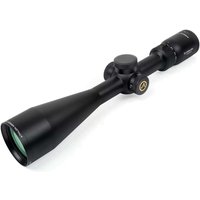
Athlon Optics Argos HMR 4-20x50mm 1in Tube Rifle Scope, SFP, Mildot Reticle, Black, 214005
via OpticsPlanet
$369.99
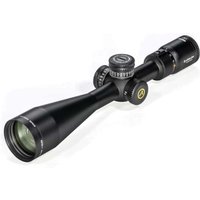
Athlon Optics Heras SPR 4-20x50mm 1in Tube Rifle Scope, SFP, AAGR2 MOA Reticle, Black, 214505
via OpticsPlanet
$399.99

Athlon Optics Midas HMR 4-24x50 30mm Tube Rifle Scope, Second Focal Plane, AHMC1 MOA, Black, 213058
via OpticsPlanet
$639.99
Buying Advice
Be honest about what long range means for hunting. For a clean, ethical shot on a deer or pronghorn, the limit is set by your skill, your rifle, your cartridge's energy at the target and your ability to read the wind, not by the scope. A good scope removes the optics as a source of error. It does not make a 600-yard shot a good idea. Practise at the distances you intend to hunt at, from field positions, and be ready to pass on a shot.
MOA or MRAD? Both work, so pick one system and use it everywhere. A turret click of 1/4 MOA moves the point of impact about 0.26 inch at 100 yards (1 MOA is about 1.047 inches at 100 yards). A 0.1 mil click moves it 0.36 inch at 100 yards, which is 1 cm at 100 metres. Mil scopes are easier to use with mil-spaced reticles and with spotting corrections, while MOA is more intuitive if you already think in inches at 100 yards. The catalog lists both. The key rule is that the turrets and the reticle must use the same unit, which is how Athlon builds its matched MOA and MRAD versions.
Choose the focal plane by how you shoot. In a first focal plane scope, the reticle grows and shrinks with the image, so its marks are valid at every magnification and you can use them for holds and ranging at any power. In a second focal plane scope the reticle stays the same size, so the marks are only valid at one magnification, usually the highest. SFP is easier to see at low power, which helps in timber and in the last minutes of light. FFP suits a hunter who dials or holds at many different powers. If you mostly dial a ranged distance and shoot at a fixed high power, SFP is perfectly fine, and it is cheaper.
Magnification for hunting is lower than for target shooting. A 4-20x, 4.5-27x or 2.5-15x is plenty. You rarely need more than 12x to 15x in the field, because heat shimmer, shaky positions and a deer that will not stand still all limit what extra power can do. A low end of 2.5x or 4x is worth more than a high end of 30x, because it lets you find an animal quickly and shoot a close one. If you do shoot small targets such as prairie dogs at distance, a 6-24x or a 4-24x makes sense.
The Argos, Midas and Ares lines. The Argos is Athlon's value line: simple, plenty of magnification and reticle choices, and a good fit for a hunting rifle on a budget. The Midas steps up, with 30mm tubes on many models. The Ares is the premium line, and is the right place to spend if you hunt in rough weather and low light and plan to keep one scope for years. The Helos and Heras lines add more tactical and precision-oriented designs. Compare the specific model, not just the family name.
Tube size and travel. A 30mm tube gives more internal adjustment than a 1-inch tube, which matters for long-range dialling, because a rifle that starts at a 100-yard zero needs a lot of elevation to reach 600 yards with a flat-shooting cartridge. A 1-inch tube is lighter and fine for shots inside 400 yards. If you plan to dial well past 500 yards, look for a 30mm tube, confirm the total elevation travel in the specification, and mount on a 20 MOA base if your rifle needs the extra adjustment.
Parallax and side focus. At longer ranges and high magnification, parallax error is real: if your eye is off-centre, the reticle appears to move against the target. Side focus lets you set the parallax to the distance, so your point of aim holds as your head moves. Many hunting scopes in this bracket include it. Set it for the range and check by moving your head. At 100 to 200 yards, a fixed-parallax scope is fine; at 400 yards and beyond, you want the adjustment.
Eye relief and a clean mount matter more at long range. A scope mounted too far forward, on a rifle that kicks, will punish you with a scope bite on the shot you need to see. Set the eye relief with your rifle in your real shooting position, use a good set of rings, torque them to the maker's figure and level the reticle with a plumb line or level. Cant is a real cause of misses at distance, so an anti-cant level is cheap insurance.
Do the box test and a drop check. After zeroing, fire a group, dial a set number of clicks up and back down, and confirm the group returns to zero. Then shoot at 200, 300 and 400 yards and compare your actual drops with your ballistic calculator. If the scope dials true, you can trust it; if not, you need to know before the season. A scope that tracks well and returns to zero is worth far more than one with a lot of magnification.
Add a rangefinder and a plan. A scope does not tell you how far away the animal is. A good rangefinder and a simple drop chart, taped to the stock or saved in an app, matter more than the last bit of magnification. Practise ranging, dialling and shooting from a field position, such as a pack or a bipod, until it is routine.
Rules vary by state. Some states restrict features such as illuminated reticles or magnified optics in certain seasons, and ethics matter more than rules at long range. Check your state wildlife agency's current regulations for the season you hunt. This is general information, not legal advice.
Which Athlon should you buy? For a budget rifle that needs reach, an Argos 4-20x50 is the value pick. For a 30mm tube and a step up in build, a Midas 2.5-15x50 or 4-24x50 is a strong choice. For hard use in bad light, the Ares line is where the money is best spent. Whichever you choose, put the savings into good rings, a bipod and practice at the distance you plan to hunt.
Frequently Asked Questions
Which Athlon scope is best for long-range hunting?
For a budget rifle, an Argos 4-20x50 is the value pick. A Midas 2.5-15x50 or 4-24x50 adds a 30mm tube and a step up in build. The Ares line is the premium choice for hard use and low light. Compare the specific model and reticle.
Is Athlon a good scope brand for hunting?
Athlon is known for strong specifications and reticle choices at its price points, and it is a popular choice for hunters who want long-range features without a premium price. Compare the specific model, check the warranty terms and make sure it tracks properly when it arrives.
MOA or MRAD for hunting?
Either works. Pick one and use it for turrets, reticle and ballistic calculator. A quarter-MOA click moves impact about 0.26 inch at 100 yards, and a 0.1 mil click moves it 0.36 inch at 100 yards, which is 1 cm at 100 metres.
How much magnification do I need for hunting past 300 yards?
A 4-20x, 2.5-15x or 4-24x is plenty. Most hunters use 10x to 15x at distance, and a low end of 2.5x to 4x lets you find and shoot closer animals. More power than that rarely helps in field conditions.
First or second focal plane for long-range hunting?
FFP keeps the reticle marks valid at every magnification, which suits hunters who hold or range at several powers. SFP keeps the reticle bold at low power and is cheaper. If you dial for distance and shoot at a fixed power, SFP works well.
Do I need a 30mm tube for long-range hunting?
A 30mm tube gives more elevation travel, which matters if you plan to dial well past 500 yards. For shots inside 400 yards a 1-inch tube is lighter and sufficient.
How far can I ethically shoot a deer?
That depends on your skill, rifle, cartridge energy at the target and your ability to read the wind. Practise at the distances you intend to hunt from field positions, and pass on any shot you are not certain of. A scope removes optics as a source of error; it does not make a long shot ethical.
Related guides
What scope magnification do you need for 300 yards? Real 2026 US prices on the Vortex Crossfire HD and Diamondback, plus holdover and parallax advice.
Best Long Range Scopes Under $1,000Find the best long range scope under $1,000 for PRS, hunting, and precision shooting. Expert-tested picks, buying advice, and FAQs for US shooters in 2026.
MOA vs MRAD: Which Reticle System Should You Choose?MOA vs MRAD explained for US shooters. Learn what each system means, which suits hunting or long-range PRS, how to convert between them…
FFP vs SFP Scopes ExplainedFFP vs SFP explained: how reticle subtensions hold at every magnification, which disciplines favor each, and why FFP costs more. A 2026 buyer's guide.
Best Scopes for Elk and Mule Deer HuntingBest scopes for elk and mule deer hunting in 2026 — magnification, BDC and illuminated reticles, and real picks from $299 budget to premium glass.
Best Optics for Shooting Beyond 800 YardsFind the best optics for 800+ yard shooting in 2026. Expert guide covers FFP scopes, thermal optics, night vision, spotting scopes…
Not sure which scope is right for you?
Try our AI-powered scope finder — answer a few questions and get personalised recommendations.
Find My Scope →Get a scope tip every day
Follow AiScopes on Facebook for daily buying guides, deals and gear advice.
Follow on Facebook