Best Burris Scopes for Deer Hunting in 2026
By Peter Makulek · Senior Optics Editor · · Live prices from US retailers
Burris has been a go-to name for budget-minded deer hunters for a long time, and the current catalog shows why. You can find a Fullfield 3-9x40 or a Droptine for under $200, including bigger magnification ranges such as the 4.5-14x42, and a Signature HD for hunters who want better glass. The range covers nearly every deer rifle and every budget, which also makes it easy to buy the wrong one.
This guide explains how the lines differ in plain terms, which magnification and objective size suit whitetail, mule deer and blacktail hunting, how to read the Ballistic Plex reticles Burris puts on many of its hunting scopes, and the setup mistakes that waste a good scope. It is written around the shots deer hunters really take, which for most is inside 300 yards.
The picks below come from our live US catalog of in-stock Burris second focal plane scopes in the classic deer configurations, so you can compare them side by side. Prices and availability update from the retailer.
Top Picks — Live US Prices

Burris Fullfield E1 450 Bushmaster Rifle Scope, 3-9x40mm, 1 inch Tube, Second Focal Plane, Ballistic Plex Reticle, Black, 200348
via OpticsPlanet
$137.99
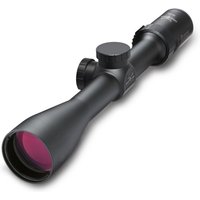
Burris Droptine 3-9x40 mm Rifle Scope, 1 in Tube, Second Focal Plane, Matte, Non-Illuminated Ballistic Plex Reticle, MOA Adjustment, Black, 200017
via OpticsPlanet
$149.99

Burris Signature HD Scope 2-10x40 mm Rifle Scope, 1 in Tube, Second Focal Plane, Black, Matte, Non-Illuminated Ballistic E3 Reticle, MOA Adjustment, 200530
via OpticsPlanet
$399.99
Buying Advice
Know the three lines you will actually meet. The Fullfield is Burris's long-running hunting scope and is the one most deer hunters buy: simple, rugged and affordable. The Droptine is a newer value line, often sold in bigger magnification ranges such as 4.5-14x42. The Signature HD sits higher, with better glass and a wider choice of reticles, and is aimed at hunters who want more from the last minutes of light. There are also Veracity scopes above that, but for a typical deer rifle the Fullfield or Signature HD is where most hunters should look.
Match magnification to your ground. A 3-9x40 covers nearly every whitetail situation, from a deer at 40 yards in timber to a careful shot across a bean field. A 2.5-10x42 or 3-12x42 adds a little reach and a lower starting power, which is better for hunting from a blind. If you hunt big fields, pipelines or western ground, a 4.5-14x42 or 4-16x50 gives you more reach, at the cost of a narrower view at the low end. Leave the scope on low or middle power while you wait. Turning up is easy; finding a moving deer through 12x is not.
Understand the Ballistic Plex E1 and E3 reticles. Many Burris hunting scopes carry a Ballistic Plex reticle: a duplex-style crosshair with extra aiming dots or hash marks below the centre for longer shots. The marks are designed for particular magnification settings and cartridge families, and the E1 and E3 names refer to different reticle versions with different mark spacings. Do not assume the marks suit your load. Read the manufacturer's chart for your cartridge, then confirm every mark on paper at the distances you plan to shoot, before the season. If you simply want a clean reticle for shots under 250 yards, a plain Plex is perfectly good.
Note the cartridge-specific versions. The catalog lists Fullfield 3-9x40 scopes with Ballistic Plex reticles made for muzzleloaders, the .350 Legend, the .450 Bushmaster and shotguns. These are tuned to the trajectories of slower, heavier loads and are worth a look if that is what you hunt with, but the reticle marks will not match a flat-shooting bolt-action cartridge. Match the version to the rifle, not the other way round.
40mm or 50mm? A bigger objective gathers more light, but the brightness your eye can use is set by the exit pupil: the objective diameter divided by the magnification. At 9x a 40mm gives a 4.4mm exit pupil, and at 12x a 42mm gives 3.5mm. In the last minutes of legal light your own pupils are wide open, so that difference is real, mostly at the top of the zoom range. At 4x or 5x any of these is brighter than your eye can use. A 50mm costs you weight and needs taller rings, so for a stand rifle used at first and last light it is worth it, and for a rifle you carry all day it is not.
Second focal plane is the right default. In an SFP scope the reticle stays the same size as you zoom, so it stays bold at low power, which is where most deer are shot. Any holds or aiming marks are only valid at one magnification, usually the highest, so learn which. First focal plane scopes keep marks valid at every power, but at 3x the reticle can shrink to a thin line that is hard to see against dark timber. For a deer rifle used inside 300 yards, SFP is simpler and cheaper.
Do not pay for parallax adjustment you will not use. Parallax is the apparent shift of the reticle against the target when your eye is off centre. Most hunting scopes are set parallax-free at about 100 yards, and at normal deer distances with a centred cheek weld the error is small. A side-focus or adjustable objective earns its place on a 4-16x or larger scope for longer shots or small targets. On a 3-9x deer scope it is one more thing to fiddle with when a buck steps out.
Get the mounting right. A 1-inch tube is standard on most Fullfield and Droptine models and suits most deer rifles, with a huge choice of rings. Check the eye relief against your rifle's recoil, and mount the scope so you see a full picture the moment your cheek touches the stock with the power turned down. Torque the rings to the maker's figure, level the reticle, and zero with the same ammunition you will hunt with. A great scope in loose mounts will lose to a modest scope in solid ones.
Check the scope when it arrives. Look through it at a distant edge in daylight and at dusk, run the power ring end to end, and confirm the turrets click cleanly. After mounting, fire a box test: shoot a group, dial a set number of clicks in each direction, return to zero and confirm the group returns to the same place. A scope that fails in September will fail you in November. Burris backs its hunting scopes with a lifetime warranty, but read the terms and keep your receipt.
Rules vary by state. Some states restrict features such as illuminated reticles or magnified optics in certain seasons, particularly muzzleloader and primitive-weapon seasons. Check your state wildlife agency's current regulations for the season you hunt. This is general information, not legal advice.
Which Burris should you buy? For a budget deer rifle, a Fullfield 3-9x40 or 2.5-10x42 is the straightforward answer. For a hunter who wants more magnification at the same price, the Droptine 4.5-14x42 is hard to beat on paper. For longer shots, low-light hunting and better glass, step up to a Signature HD 3-15x44 or 2-10x40. Whichever you pick, save some budget for solid rings and a box of the ammunition you will hunt with.
Frequently Asked Questions
Which Burris scope is best for deer hunting?
For most hunters, a Fullfield 3-9x40 or 2.5-10x42 is the straightforward choice, and a Droptine 4.5-14x42 adds reach at a similar price. Step up to a Signature HD if you hunt a lot at first and last light and want better glass.
Is Burris Fullfield good for deer hunting?
Yes. The Fullfield is Burris's classic hunting scope: simple, rugged and affordable, with reticle options that suit typical whitetail and mule deer distances. It is a sensible choice for a stand rifle, a truck gun or a first big-game rifle.
What does Ballistic Plex mean?
Ballistic Plex is a duplex-style reticle with extra aiming marks below the centre for longer shots. The marks are designed for particular magnifications and cartridge families, so confirm each mark with your own ammunition on paper before you rely on it.
Fullfield or Droptine: which is better?
The Fullfield is the longer-established hunting line, while the Droptine is a value line that often comes in bigger magnification ranges. Compare the specific models you are considering for reticle, magnification and eye relief rather than choosing on the name alone.
What magnification do I need for deer hunting?
A 3-9x covers most whitetail hunting. A 2.5-10x or 3-12x adds a little reach, and a 4.5-14x suits open country and longer shots. Keep the scope on low to middle power while you wait.
Do I need an illuminated reticle for deer?
Not always. It helps in the last minutes of light against dark timber if you keep illumination on its lowest setting. A bold duplex-style reticle does much of the same job without batteries. Check whether your state restricts illuminated reticles in any season you hunt.
What range should I zero my deer rifle at?
A 100-yard zero is simple and easy to confirm. Many hunters with flat-shooting cartridges prefer a 200-yard zero. Whichever you choose, confirm it with the exact ammunition you hunt with and know your holds at 250 and 300 yards.
Related guides
What $250 to $500 buys in a deer scope: low-light glass, 3-9x40 vs 3-9x50 vs 4-12x40, reticles, eye relief and live US picks in stock.
Best Hunting Scopes for Deer Under $200 in 2026Find the best hunting scope for deer under $200 in 2026. We cover top picks for whitetail stands, low-light timber, and Western upgrades…
How Much Magnification Do You Actually Need for Tree-Stand Whitetail?Discover exactly how much scope magnification you need for tree-stand whitetail hunting. We break down power ranges, FOV…
Best Scopes for .350 Legend: 2026 US Buyer's GuideFind the best scope for 350 Legend in 2026. Expert picks for straight-wall deer hunting at realistic ranges, covering budget to premium options…
Best Slug Gun Scopes for Deer Hunting in 2026Best scope for a slug gun? Compare low-power shotgun scopes from Vortex and Burris for deer, with real 2026 US prices, eye relief and mounting advice.
Best Scopes for .30-06 Springfield (2026)Find the best scope for your .30-06 Springfield in 2026. Recoil-proof construction, ideal magnification for 400-yard shots…
Not sure which scope is right for you?
Try our AI-powered scope finder — answer a few questions and get personalised recommendations.
Find My Scope →Get a scope tip every day
Follow AiScopes on Facebook for daily buying guides, deals and gear advice.
Follow on Facebook