Rifle vs. Scope: Where to Put Your Money for Long Range
By Peter Makulek · Senior Optics Editor · · Live prices from US retailers
Quick answer: allocate roughly 50–60% of your total budget to the scope and the remainder to the rifle. On a $1,500 budget, that means $750–$900 on a quality FFP or SFP optic with reliable tracking and repeatable turrets, and $600–$750 on a proven bolt-action platform. The scope is almost always the bottleneck — a sub-MOA rifle paired with a $200 scope will leave you chasing misses past 600 yards.
This advice may feel counterintuitive, especially if you grew up hearing that the rifle is king. Modern manufacturing has changed the equation. Rifles like the Ruger American Predator, Bergara B-14 HMR, Tikka T3x Lite, and Howa 1500 routinely deliver sub-MOA groups with factory match ammunition — all for $500–$800 at retail. That means a $600 rifle and a $900 scope is not reckless spending; it is simply matching system components so neither one wastes the other's potential. The scope is where optical clarity, tracking repeatability, and turret precision either make or break your hits at 800, 1,000, or even 1,200 yards.
Why does the optic matter so much? At distance, you need a reticle that helps you hold wind and elevation corrections quickly and precisely. A first-focal-plane (FFP) reticle scales with magnification, so your subtensions are accurate at every power — critical for holdovers when time is short. Second-focal-plane (SFP) can work fine if you always dial and shoot at one power setting, but FFP gives more flexibility in the field. You also need parallax adjustment (side focus) that works cleanly from 50 yards to beyond 1,000, consistent click values that actually move the point of impact where they promise, and glass that resolves a steel plate at 1,000 yards in mirage and low light.
For US shooters, this budget sweet spot is enormous. Competitive PRS and NRL series, steel-challenge leagues, and Western-state hunting for mule deer, antelope, and elk all demand reliable long-range solutions. Common calibers — 6.5 Creedmoor, .308 Winchester, 6.5 PRC, and .300 Winchester Magnum — are widely available and well-supported with factory match loads. The terrain in places like Wyoming, Montana, Colorado, and the open plains of west Texas regularly presents 400–800 yard shots on game or steel. Getting the budget split right is the single most impactful decision before you ever pull the trigger.
Top Picks — Live US Prices

Hawke Sport Optics Vantage Rifle Scope, 3-9x40mm, 1in, SFP, Rimfire .22 LR HV Reticle, Black, 14222
via OpticsPlanet
$175.00
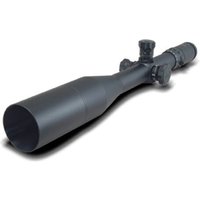
ADE Advanced Optics 6-25x56mm Long Range Rifle Scope w/ Illuminated Reticle, 35mm Tube, Glass Etched Mildot Bar Reticle, Matte, Black, 6-25X56SFIR
via OpticsPlanet
$212.79
Hawke Sport Optics Vantage Rifle Scope, 3-9x40mm, 1in, SFP, Rimfire .22 LR Subsonic Reticle, Black, 14223
via OpticsPlanet
$219.99
Buying Advice
Start with the specs that separate a capable long-range scope from a frustrating one. Tracking accuracy means the turrets actually move point of impact by exactly 0.1 MRAD (roughly 0.36 inches at 100 yards) or ¼ MOA (roughly 0.26 inches at 100 yards) per click, every click, up and back down — this is called "return to zero" or "box test" performance. A zero stop prevents you from dialing below your 100-yard zero, which is invaluable when you're spinning turrets between stages or targets. Parallax adjustment (side focus) should go down to at least 50 yards and ideally to 10 yards on models that double for positional shooting. For glass, look for ED (extra-low dispersion) elements and fully multi-coated lenses. At 14–18× magnification you should be able to clearly see a 12-inch plate at 800 yards in average atmospheric conditions.
Budget tiers break down roughly as follows within the scope portion of your spend. Entry level ($300–$500): Vortex Diamondback Tactical, Bushnell Match Pro, and the Burris Veracity — these deliver surprisingly good tracking and usable FFP reticles, though glass clarity and coating quality fall off in low light and heavy mirage. Mid-range ($500–$900): Vortex Viper PST Gen II, Leupold Mark 5HD 3.6-18×44, Bushnell Elite Tactical XRS3, and the Burris XTR III — this tier is the sweet spot for the $1,000–$1,500 total budget, offering genuinely reliable tracking, true zero stops, quality ED glass, and Christmas-tree-style reticles with useful wind holds. Premium ($900–$1,500+): Nightforce NX8 or SHV, March FX, and higher-end Leupold and Vortex Razor lines — if you can stretch the scope budget or accept a more modest rifle, these reward you with brighter images, tighter tolerances, and bombproof construction.
The most common mistake buyers make is spending $1,200 on a rifle with a custom stock, match barrel, and tuned trigger, then slapping on a $250 scope and wondering why they can't reliably hit a 2 MOA target at 700 yards. The second most common mistake is ignoring the reticle type. A simple duplex reticle offers no wind or elevation references — you must dial every correction. A mil-based Christmas-tree reticle like the Vortex EBR-7C or the Bushnell DFP lets you hold off for wind without touching a turret, cutting engagement time in half. Third, many buyers forget the mount. A quality 20-MOA Picatinny rail and a set of properly torqued rings (or a one-piece cantilever mount) can cost $75–$200 and should be factored into the total budget. Cheap rings that shift under recoil will undo every dollar you spent on the scope.
For US-specific context, the 6.5 Creedmoor remains the dominant entry point for long-range shooting because factory match ammunition (Hornady ELD Match 140 grain, Federal Gold Medal 130 grain) is available at nearly every sporting goods retailer and through Amazon.com and OpticsPlanet, typically in the $1.20–$1.80/round range. If you plan to compete in PRS or NRL, MRAD turrets are the de facto standard — stage descriptions are given in mils, spotters call corrections in mils, and DOPE cards are built in mils. If your background is hunting and you grew up thinking in MOA, that system still works perfectly well; just commit to one and buy your scope accordingly. State-level considerations are minimal for optics purchases, though some states (California, certain county-level rules in Colorado and Oregon) regulate magazine capacity or caliber for hunting — always check your state game commission before building a long-range hunting rig.
Matching the optic to your use case is the final piece. If you shoot PRS-style matches with positional stages from 200 to 1,200 yards, prioritize an FFP scope with a detailed reticle, a locking turret or zero stop, and at least 10 mils (roughly 34 MOA) of internal elevation adjustment — the Vortex Viper PST Gen II 5-25×50 and Bushnell XRS3 both deliver this. If your use case is Western big-game hunting where you might take one shot at a mule deer at 500 yards, you can trade some magnification for lighter weight and still benefit from an FFP reticle: something like a Leupold VX-5HD 3-15×44 or a Vortex Viper HD 3-15×44 keeps the rifle under nine pounds total. For steel-ringing fun at known distances on a range, a well-tracking SFP scope dialed to its correct magnification can save money — the Vortex Diamondback Tactical FFP is competitive here, but even a Bushnell Match Pro in SFP configuration works if you always dial at 18×.
A brief brand landscape for US buyers: Vortex dominates the mid-range with an unconditional lifetime warranty and widespread availability — nearly every local gun shop carries their line, and Amazon.com stocks most SKUs. Leupold, manufactured in Beaverton, Oregon, commands loyalty for its lightweight hunting optics and the Mark 5HD line aimed at precision shooters. Nightforce, based in Orofino, Idaho, is the benchmark for professional and military-grade durability, though their scopes typically start above $1,000. Bushnell has made a serious push with the XRS3 and Match Pro lines, offering PRS-ready features at aggressive prices. Burris and its parent company Beretta USA back the XTR III series with solid turret feel. March scopes, imported from Japan, are prized in benchrest and F-class circles for their optical purity but carry higher price tags. Each brand has a credible entry in the $500–$900 sweet spot where your budget-split math points.
Frequently Asked Questions
Should I really spend more on the scope than the rifle?
Yes, for long-range shooting. Modern bolt-action rifles in the $500–$750 range (Bergara B-14, Tikka T3x, Howa 1500) consistently shoot sub-MOA with quality ammunition. The scope is where tracking precision, optical clarity, and reticle utility determine whether you can actually connect at 600–1,000+ yards. A $900 scope on a $600 rifle will outperform the reverse combination almost every time.
FFP or SFP — which is better for long-range shooting on a budget?
FFP (first focal plane) is generally preferred because the reticle subtensions remain accurate at every magnification, letting you hold over or hold off for wind without dialing. SFP reticles are only accurate at one specific magnification (usually maximum). If you always dial your turrets and shoot at max power, SFP is fine — and sometimes a bit cheaper. But for dynamic PRS stages or field shooting where speed matters, FFP offers a real advantage.
MOA or MRAD — does it matter for a first long-range scope?
Both systems work equally well in terms of precision. MRAD (mil-radian) is the standard in PRS/NRL competition; if you plan to compete or train with others, mils simplify communication. MOA is more intuitive for shooters who think in inches (1 MOA ≈ 1.047 inches at 100 yards). The key is to match your turrets and reticle — never pair an MOA reticle with MRAD turrets or vice versa. Pick one system and commit.
What magnification range do I need for long-range shooting?
A 5-25× or 4-16× scope covers the vast majority of long-range needs from 100 to 1,200 yards. Higher magnification is not always better; mirage, atmospheric distortion, and a narrower field of view can actually make spotting impacts harder above 20× in summer heat. For most shooters on this budget, a 5-25×50 FFP scope is the versatile sweet spot.
How important is a zero stop, and can I skip it to save money?
A zero stop is extremely important for practical long-range shooting. It prevents you from dialing below your established 100-yard zero, which means after engaging a distant target you can spin your turret back to the mechanical stop and know you are at zero — no counting clicks under pressure. Most scopes in the $500–$900 range now include a zero stop. Skipping it to save $50–$100 is a false economy if you plan to dial regularly.
Do I need to budget separately for a scope mount or rings?
Absolutely. A quality one-piece cantilever mount or a set of matched rings plus a 20-MOA Picatinny rail typically costs $75–$200. Cheap rings that shift under recoil will destroy your zero and waste every dollar you invested in optics. Budget at least $100 for a reputable mount from Vortex, Leupold, Burris, or Seekins Precision. Factor this into your total $1,000–$1,500 plan from the start.
What caliber pairs best with this budget for long-range shooting?
6.5 Creedmoor is the most popular choice because factory match ammunition is widely available, recoil is moderate, and ballistic performance is excellent out to 1,000+ yards. The .308 Winchester is another strong option with even cheaper practice ammo, though it drops more and drifts more in wind past 800 yards. For bigger Western game beyond 500 yards, 6.5 PRC and .300 Win Mag are worth considering, but factory ammunition costs more per round.
Can I use a long-range scope for hunting too?
Yes, but consider weight and magnification range. A 5-25×50 scope often weighs 28–34 ounces, which adds up on a mountain hunt. If you plan to dual-purpose the scope, a 3-15× or 3-18× in a 44mm objective offers a lighter package that still gives enough magnification for shots to 800 yards. Many Western hunters successfully use the same FFP MRAD scope for PRS practice and elk or mule deer season.
Where is the best place to buy rifle scopes in the US?
Amazon.com offers competitive pricing, fast shipping, and easy returns for most major brands including Vortex, Bushnell, and Burris. OpticsPlanet carries a deeper catalog including Nightforce and March models and often runs bundle deals. Local dealers are worth checking too — use the aiscopes.us 50-state dealer locator to find an authorized retailer near you where you can physically handle the scope before buying.
Related guides
First-time hunter torn between two rifle scopes? Our 2026 guide breaks down magnification, reticle type, glass quality…
Finding the Forever Optic for Your LWRC REPR MK I 20"Choosing the best long-range scope for the LWRC REPR MK I 20" in 7.62 NATO? Our 2026 guide covers FFP vs SFP, night vision, thermal…
How to Spot Fake Scopes on eBay & Protect Your InvestmentLearn how to identify counterfeit rifle scopes, thermal optics, and night vision devices sold on eBay.
Thermal Scope, Scanner, or Clip-On: What to Buy FirstShould you buy a dedicated thermal scope plus a handheld scanner, or start with a clip-on thermal? We break down cost, capability…
Not sure which scope is right for you?
Try our AI-powered scope finder — answer a few questions and get personalised recommendations.
Find My Scope →Get a scope tip every day
Follow AiScopes on Facebook for daily buying guides, deals and gear advice.
Follow on Facebook