New Hunter? How to Pick Between Two Scopes
By Peter Makulek · Senior Optics Editor · · Live prices from US retailers
Quick answer: if you are a new hunter choosing between two scopes, prioritize the one with better glass clarity and a magnification range that suits your actual hunting distances — for most US whitetail situations under 150 yards, a 2-10x or 3-9x with a 40–50 mm objective is the sweet spot. A scope like the Vortex Diamondback Tactical 4-16x44 or the Leupold VX-Freedom 3-9x40 will cover 90% of first-season needs without overcomplicating things.
Deciding between two scopes is one of the most common dilemmas new hunters face, and it is a smart problem to have — it means you have already narrowed your search. The trouble is that spec sheets can blur together. One scope might boast higher magnification while the other has a wider field of view or a more intuitive reticle. The key is understanding which specs actually matter for the game you are pursuing, the terrain you will hunt, and the rifle platform you are mounting to. In the US market, whitetail from a treestand, mule deer across Western basins, and Southern hog hunts each demand slightly different optic priorities.
Magnification range is the first fork in the road. A 3-9x scope has been the go-to hunting scope for decades because it offers enough zoom for 200-yard shots while still giving you a wide, bright view at 3x for close brush encounters. If you plan to stretch beyond 300 yards — say, pronghorn in Wyoming or open-country mule deer in Montana — a 4-16x or even a 2-12x gives you extra reach without sacrificing low-end versatility. More magnification is not always better: higher power narrows your field of view and amplifies hand shake, which matters on a cold morning when adrenaline is pumping.
The second major factor is optical quality — the coatings, glass elements, and engineering that determine how bright, sharp, and color-true the image looks during the golden hours of dawn and dusk when game is most active. A $200 scope and a $600 scope may share the same magnification numbers, but the difference in low-light performance can be dramatic. For a new hunter, investing in the best glass you can afford within a practical magnification range will pay dividends long before a fancy mil-dot reticle or illuminated center dot will.
Top Picks — Live US Prices

Bushnell Simmons Pro Hunter 3-9x40mm Riflescope
via Bushnell
$89.95
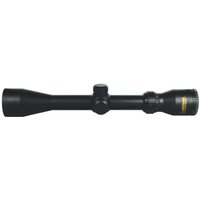
Traditions Muzzleloader Hunter Black Powder 3-9x40mm Circle Reticle A1143 Scope
via OpticsPlanet
$95.99
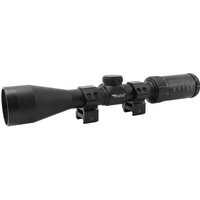
BSA Optics Optix Hunting Rifle Scope, 4-12x40mm, BDC-8 Reticle, Black, HS4-12X40TB
via OpticsPlanet
$99.49
Buying Advice
Start by understanding the key specs on each scope's box. Magnification range (e.g., 3-9x) tells you the zoom spread; objective lens diameter (e.g., 40 mm) influences light gathering; tube diameter (1 inch vs 30 mm) affects adjustment range and mount compatibility; and reticle plane — first focal plane (FFP) or second focal plane (SFP) — determines whether the reticle scales with magnification. For hunting, SFP is the traditional choice because the reticle stays the same visual size at every power, making it fast to acquire a target. FFP reticles are popular for long-range and PRS shooting where holdover marks need to stay proportional, but many new hunters find SFP simpler and more intuitive in the field.
Budget tiers matter, and knowing what each bracket buys keeps expectations realistic. Entry-level scopes in the $150–$300 range — like the Bushnell Banner 2 or Vortex Crossfire II — deliver solid clarity in good light and perfectly functional turrets for hunting. Mid-range optics from $300–$700, such as the Leupold VX-Freedom line or the Vortex Diamondback Tactical series, add fully multi-coated lenses for noticeably better dusk-and-dawn brightness, capped turrets with crisper clicks, and improved eye relief on magnum calibers. Premium glass above $700 — Zeiss Conquest V4, Leupold VX-5HD, Nightforce SHV — offers edge-to-edge sharpness, superior color fidelity, and bombproof construction, but for a first hunting scope the mid tier is the sweet spot of value.
The most common mistake new hunters make is over-magnifying. A 6-24x50 scope sounds impressive, but on a .308 deer rifle it adds unnecessary weight, narrows your field of view at the low end, and tempts shots at distances the shooter has not practiced. Another frequent error is ignoring eye relief — anything less than 3.5 inches on a .30-06 or 7mm Rem Mag will punish you with scope bite under recoil. Also, do not forget to budget for quality rings or a one-piece mount; a $400 scope on $15 rings defeats the purpose. Look for rings that match your tube diameter and your receiver's rail type (Picatinny, Weaver, or proprietary).
In the US market, most whitetail deer are taken at distances well under 150 yards from treestands, ground blinds, or field edges. Western hunters pursuing mule deer, elk, or pronghorn may need to reach 300–400 yards, and that is where a 4-16x scope with exposed turrets and a BDC or MOA/MRAD reticle earns its keep. For rimfire hunters and small-game shooters using a .22 LR, a dedicated rimfire scope with a parallax setting down to 25–50 yards is essential — mounting a centerfire-parallax scope on a rimfire introduces error at close range. Air rifle shooters on springer platforms should stick to scopes rated for reverse recoil and realistic ranges of 50–75 yards. You can find all of these categories on Amazon.com; OpticsPlanet is another solid US retailer with a broad selection.
Matching the scope to your use case is ultimately what breaks a tie between two finalists. Ask yourself: What is my realistic maximum shot distance this season? Do I hunt mostly in timber or open fields? Will I ever use this scope on a second rifle — perhaps swapping from a .270 Win to a .350 Legend for a Midwest straight-wall state? A versatile 3-9x40 or 2-10x42 with capped turrets is the easiest scope to move between platforms. If you know you will stay on one rifle and want to grow into longer shots, a 4-16x44 with a zero stop and exposed turrets gives room to develop. Either way, buy from a brand with a transferable warranty — Vortex's unconditional VIP warranty and Leupold's lifetime guarantee are gold standards in the US.
A brief brand landscape helps frame your two-scope decision. Vortex dominates the entry-to-mid tier with aggressive warranties and wide dealer networks across all 50 states. Leupold remains the heritage American optics brand with lightweight scopes beloved by backcountry hunters. Bushnell offers exceptional bang-for-buck at the entry level. Zeiss and Nightforce compete at the premium end with superb glass and precision turrets. For thermal or night vision applications — increasingly popular for hog and predator hunting in Texas and the South — Pulsar and Hikmicro lead the US market, though those are specialized tools rather than first-scope choices. The Arken optics brand has gained traction among budget-conscious precision shooters, offering features like zero stops and FFP reticles at surprisingly low price points. Understanding where each brand sits helps you compare apples to apples when your two finalists are from different manufacturers.
Frequently Asked Questions
Is the new Arken 2-12x SFP a good choice for a first hunting scope?
The Arken EP5 2-12x SFP has generated real buzz for offering a zero stop, quality glass, and a practical hunting magnification range at a sub-$400 price point. Its 2x low end gives you excellent situational awareness in thick timber, while 12x is more than enough for shots out to 400 yards on big game. For a new hunter who wants room to grow into precision shooting later, it is a strong contender — just be sure the SFP reticle style suits your preference for a consistent-size crosshair at all magnifications.
SFP or FFP — which reticle plane should a new hunter choose?
For most hunting applications, SFP (second focal plane) is the practical choice. The reticle size stays constant as you zoom, making target acquisition fast and intuitive. FFP scopes shine when you need holdover marks to be accurate at every magnification — a bigger advantage in precision rifle competition. If you plan to dial your turrets for long shots rather than hold over, SFP works perfectly for hunting and is often less expensive at the same quality tier.
How much magnification do I really need for whitetail deer hunting?
The vast majority of US whitetail are taken at 100 yards or less, making a 3-9x scope more than adequate. Even at 6x you have a clear, bright image of a deer at 150 yards. Going beyond 12x for whitetail is rarely necessary and adds weight, cost, and a narrower field of view that slows target acquisition during the seconds that matter. Save the high magnification for dedicated long-range or Western big-game setups.
What is the difference between MOA and MRAD turrets, and which is better for hunting?
MOA (minute of angle) and MRAD (milliradian) are simply two angular measurement systems. One MOA equals approximately 1.047 inches at 100 yards; one MRAD click at 0.1 mil equals 1 cm at 100 meters, or roughly 0.36 inches at 100 yards. Neither is inherently better for hunting — MOA is more intuitive for shooters who think in inches, while MRAD is popular in precision and military circles. Pick whichever system your ballistic app or reticle uses so everything speaks the same language.
Do I need illumination on a hunting scope?
An illuminated reticle dot can help during the low-light minutes of legal shooting time at dawn and dusk, especially against dark timber backgrounds where a black crosshair disappears. It is not essential, but it is a nice-to-have feature that adds $50–$100 to the price. If your two scope finalists are otherwise equal and one has illumination, that is a reasonable tiebreaker — just ensure the illumination is adjustable enough to not wash out your sight picture.
Can I use a regular rifle scope on an air rifle or rimfire?
For rimfire rifles, you need a scope with a parallax adjustment that goes down to 25–50 yards; most centerfire scopes are parallax-set at 100 yards or more, which introduces aiming error at close range. For spring-piston air rifles, you also need a scope rated for bi-directional (reverse) recoil — standard centerfire scopes can be damaged by the unique forward-then-back jolt of a springer. Dedicated rimfire and air rifle scopes solve both issues and are widely available from Vortex, Bushnell, and others.
How do I decide between two scopes at different price points?
List the specs side by side — magnification range, objective diameter, tube size, reticle type, turret style, weight, eye relief, and warranty. Then compare glass quality by reading trusted reviews or, ideally, looking through both at a dealer. The pricier scope usually wins on low-light clarity and build quality. If both meet your actual hunting needs, the more affordable option frees up budget for quality rings, ammunition for practice, or range time — all of which improve your odds more than marginal glass upgrades.
Should a new hunter consider a thermal or night vision scope?
Thermal and night vision scopes from brands like Pulsar and Hikmicro are game-changers for nighttime hog and predator hunting in states where legal, but they are specialized and expensive — often $1,500 and up. For a first hunting scope on a deer rifle, a quality daylight optic is the right starting point. Once you have a season or two under your belt and want to add hog hunting in Texas or coyote calling after dark, a clip-on thermal or a dedicated thermal unit makes an excellent second optic.
Where should I buy my hunting scope in the US?
Amazon.com offers competitive pricing, fast shipping, and easy returns on most major optic brands. OpticsPlanet is another reputable US retailer with a huge selection and frequent sales. Local dealers — which you can find via the aiscopes.us 50-state dealer locator — let you physically look through scopes before buying, which is invaluable for comparing glass quality. Whichever route you choose, verify that the scope comes with the manufacturer's full US warranty.
Related guides
Find the best rifle scopes and red dots for glasses wearers and astigmatism. We cover eye relief, forgiving eyeboxes, red-dot blur fixes…
Rifle vs. Scope: Where to Put Your Money for Long RangeLearn exactly how to divide a $1,000–$1,500 budget between your rifle and scope for long-range shooting.
Best Scopes for the Tikka T3x (Lite, Varmint & CTR)Find the best scopes for every Tikka T3x variant—Lite, Varmint, and CTR. We cover mounting quirks, ring heights, rail gaps…
Schmidt & Bender PM II SFP: Understanding the Double-Turn TurretWhy does the Schmidt & Bender PM II SFP use a double-turn turret? We explain how it works, when it matters, and how it compares to single-turn…
Nikon Rimfire Scopes: What Happened & What to Buy InsteadNikon rimfire scopes were legendary, but the line is discontinued. We cover what made them great and the best alternatives for .22LR in 2026 for US…
Not sure which scope is right for you?
Try our AI-powered scope finder — answer a few questions and get personalised recommendations.
Find My Scope →Get a scope tip every day
Follow AiScopes on Facebook for daily buying guides, deals and gear advice.
Follow on Facebook