LPVO vs ACOG: Which Optic for a 16-Inch General-Purpose AR-15?
By Peter Makulek · Senior Optics Editor · · Live prices from US retailers
Quick answer: for most people building one 16-inch AR-15 to do everything, a 1-6x LPVO is the better fit. It gives you a true 1x for close work, enough magnification to identify and hit targets at 300 to 500 yards, and long eye relief that forgives a rushed mount. Pick an ACOG if low weight, a short optic and a sight with no battery matter more to you than close-range speed and a forgiving eye box.
The two optics come from different ideas. An ACOG is a fixed-power prism sight. The common TA31 is 4x32, and its reticle is lit by fiber optics and tritium with no switch and no battery. A low power variable optic (LPVO) is a conventional scope that zooms from 1x up to 6x, 8x or 10x, with a battery-lit reticle. On a 16-inch rifle that may be used at 10 yards and at 400, that difference shapes everything else.
This guide compares them on the points that decide the purchase: weight, eye relief, field of view, close-range use, illumination, reticles and total cost. The specs quoted come from the makers' own product pages, checked in October 2026. The picks below are LPVOs from our live US catalog of in-stock scopes.
Top Picks — Live US Prices
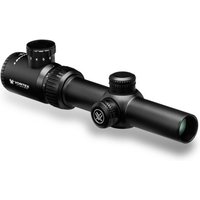
Vortex Crossfire II 1-4x24mm Rifle Scope, 30 mm Tube, SFP, V-Brite Reticle, Anodized Black, 9.6in, 15.6oz, CF2-31037
via OpticsPlanet
$159.99
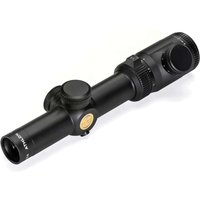
Athlon Optics Talos BTR Gen II 1-4x24mm 30mm Tube Rifle Scope, Second Focal Plane, AHSR14 IR MIL Reticle, Black, 215026
via OpticsPlanet
$187.49
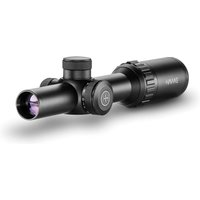
Hawke Sport Optics Vantage Rifle Scope, 1-4x20mm, 1 inch Tube, Second Focal Plane, Turkey Dot IR 1/4 MOA Reticle, Black, 14205
via OpticsPlanet
$190.00
Buying Advice
Start with weight and length, because that is where the ACOG wins clearly. Trijicon lists the TA31F 4x32 ACOG at 14.9 ounces and 5.98 inches long. Its own 1-6x24 VCOG is listed at 23.2 ounces and 10.05 inches. That is about half a pound more on the rifle than the ACOG, and it takes up far more rail. LPVO weights vary a lot by model, and most need a separate mount, so check the listed weight of the scope and the mount you plan to buy. On a rifle you carry all day, you will feel that.
Eye relief goes the other way. The TA31F has 1.5 inches of eye relief, so your eye has to be close to the sight and in the same place every time. The VCOG 1-6x24 is listed at 4 inches. Short eye relief is manageable from a square standing or prone position once your stock length is set. It is harder from awkward positions, around cover, or with a helmet, a gas mask or thick glasses in the way. If you have never used an ACOG, try one before you buy, because this is the point people either accept or return the optic over.
Field of view is closer than most people expect. The TA31F shows 36.8 feet at 100 yards at its fixed 4x. The VCOG shows 95 feet at 1x and 15.9 feet at 6x. At matching 4x the two types are in the same range, and the ACOG's view is generous for its power. The LPVO's advantage is the two ends of the dial: a very wide view at 1x, and more detail at 6x or 8x when you need to see what something is before you shoot.
Close range is the real argument for the LPVO. At 1x with both eyes open, an illuminated LPVO works much like a red dot inside 50 yards. A 4x ACOG can be used at close range with both eyes open, which Trijicon calls the Bindon Aiming Concept: your brain uses the bright reticle from one eye and the unmagnified scene from the other. It works, and it takes practice. Most shooters who use an ACOG for close work add a small red dot on top or on an offset mount. That fixes the problem and adds weight, height and cost, so count it in the comparison.
Illumination is the ACOG's other strong point. Fiber optics gather daylight and tritium glows in the dark, so the reticle is always on and there is nothing to switch on or replace. The limits are worth knowing. You cannot turn the brightness up or down. The reticle can look very bright in full sun, and it can wash out when you stand in a dark room looking at a brightly lit target. Tritium also fades, with a half-life of about 12 years, so an old ACOG is dimmer at night than a new one. An LPVO needs a battery, and the VCOG runs on a single AA. The etched reticle is still there in black if the battery dies, so a dead battery costs you the bright dot, not the sight.
Think about reticles and zero. The TA31F has a bullet drop reticle built for .223 and 5.56. A bullet drop reticle is matched to one load and one barrel length, so check which ammunition and barrel your model's reticle was designed around, then confirm the marks on paper at real distances with your 16-inch barrel. Many LPVOs offer a similar bullet drop reticle. Others use an MOA or MRAD grid, which works with any load as long as you know your drops. A fixed 4x reticle is always the same size. On a second focal plane LPVO the holdover marks are correct at one power only, normally the highest.
Cost is not a simple win for either. A new ACOG is a premium optic, and LPVOs run from budget models to scopes that cost more than an ACOG once you add a good mount. Compare complete setups: ACOG with its mount, and with a red dot if you plan to add one, against LPVO plus mount. We have left prices out here because they move weekly. Check the live listings before you decide.
So which one? Choose the LPVO if this is your only rifle, if it may be used indoors or inside 50 yards, if you wear glasses, or if you want 6x or more to identify targets at distance. Choose the ACOG if you want the lightest and shortest magnified sight, if most of your shooting is between 100 and 400 yards, and if a sight that never needs a battery is worth the short eye relief to you. Whichever you choose, zero it with the ammunition you will use, and practice at 7, 25, 100 and 300 yards so you know your holds.
Frequently Asked Questions
Is an LPVO or an ACOG better for a 16-inch AR-15?
For one general-purpose rifle, a 1-6x LPVO suits more people. It has a true 1x for close range and far more eye relief than an ACOG. An ACOG is lighter and shorter and needs no battery, and it suits shooting between 100 and 400 yards.
How much lighter is an ACOG than an LPVO?
Trijicon lists the TA31F 4x32 ACOG at 14.9 ounces. Its 1-6x24 VCOG is listed at 23.2 ounces, about half a pound more. LPVO weights vary by model, so check the scope and mount you plan to buy.
How much eye relief does an ACOG have?
The 4x32 TA31F is listed at 1.5 inches. Trijicon's 1-6x24 VCOG is listed at 4 inches, and LPVOs in general have far more eye relief than an ACOG. Try an ACOG before buying if you wear glasses or shoot from awkward positions.
Can you use an ACOG at close range?
Yes, with both eyes open, using what Trijicon calls the Bindon Aiming Concept. It takes practice, and many owners add a small red dot on top or on an offset mount for close work.
Does an ACOG need batteries?
No. The standard models are lit by fiber optics in daylight and tritium in the dark. You cannot adjust the brightness, and tritium fades with a half-life of about 12 years.
What happens if my LPVO battery dies?
You lose the illumination only. The reticle is etched on glass, so it stays visible in black. Keep a spare battery in the grip or the stock.
Will an ACOG bullet drop reticle match my 16-inch barrel?
It may be close, but check. A bullet drop reticle is built around one load and one barrel length. Look up what your model was designed for, then confirm each mark by shooting at known distances.
Is 4x enough for a general-purpose AR-15?
For hitting a man-sized target out to 400 yards, yes. A 6x or 8x LPVO helps more with seeing detail and identifying what you are looking at than with making the hit.
Related guides
Trijicon ACOG models compared for 2026 — TA01, TA31 and TA31 RMR combo pricing, battery-free illumination, and which reticle fits your AR-15.
Red Dot + Magnifier vs LPVO vs Prism: Which AR-15 Optic Setup Wins?Red dot with magnifier, LPVO, or prism scope for your AR-15? Our 2026 US buying guide compares weight, eye relief, speed…
LPVO Zero Distance: How to Choose & Why It MattersLearn the optimal zero distance for your LPVO rifle scope in 2026. Covers 50 vs 100-yard zero, BDC reticles, FFP vs SFP…
LPVO Mount Heights, Cantilever Offset & Piggyback DotsUnderstand LPVO mount heights from 1.54" to 2.26", cantilever offset, and piggyback red dots. US-focused 2026 guide with brand picks, specs…
Best LPVO for AR-15 Under $300 in 2026Find the best LPVO for the money in 2026. Our US buyer's guide compares top 1-6x and 1-8x scopes under $300 for AR-15 rifles…
MPVO vs LPVO: Which Variable Scope Belongs on Your AR-15 or Hunting Rifle?MPVO scopes (2-10x, 2-12x, 3-15x) bridge the gap between LPVO and high-power glass. Learn which magnification range fits your AR-15 or hunting rifle…
Not sure which scope is right for you?
Try our AI-powered scope finder — answer a few questions and get personalised recommendations.
Find My Scope →Get a scope tip every day
Follow AiScopes on Facebook for daily buying guides, deals and gear advice.
Follow on Facebook