Identifying Night Owl Optics Monoculars & Choosing a Worthy Successor
By Peter Makulek · Senior Optics Editor · · Live prices from US retailers
Quick answer: Most Night Owl Optics monoculars can be identified by the model number laser-engraved on the housing near the battery compartment or objective bell — common formats include NONM2, NONM3, NONM4G, and NOXM50. If the markings are worn, check the generation (Gen 1 uses a green-phosphor image tube with visible edge distortion; Gen 2+ shows sharper resolution with a micro-channel plate), objective lens diameter in millimeters, and the infrared illuminator style to cross-reference against Night Owl's archived catalog.
Night Owl Optics was a Florida-based brand that gained a loyal US following for delivering affordable Gen 1 night vision monoculars and binoculars throughout the 2000s and 2010s. Many of their products were sold through big-box retailers like Bass Pro Shops, Cabela's, and Amazon.com, making them common hand-me-downs and garage-sale finds today. The challenge now is that Night Owl Optics has largely ceased active production, meaning replacement parts, user manuals, and even model databases have become scarce online. Identifying your exact unit matters because it determines battery type, IR illuminator compatibility, and realistic performance expectations for night hunting or observation.
Understanding what generation of night vision technology your Night Owl unit uses is the single most important identification factor. Gen 1 devices — which account for the vast majority of Night Owl monoculars sold in the US — offer a useful detection range of roughly 75 to 150 yards under starlight conditions, extending somewhat with the onboard infrared illuminator. Gen 2 and Gen 3 devices are exponentially more capable, but Night Owl rarely ventured above Gen 1 territory. Knowing this helps you set realistic expectations: Gen 1 is adequate for property surveillance, casual wildlife observation, and short-range navigation, but dedicated predator hunters pursuing coyotes at 200-plus yards will want a more capable platform.
For US hunters specifically, night vision regulations vary dramatically by state. Texas, for example, permits night hunting of feral hogs and coyotes with no restrictions on night vision or thermal devices, while other states prohibit any artificial light or electronic sighting aid after dark. Before investing in a replacement monocular or a clip-on night vision scope for your rifle, always verify your state's game commission regulations. The technology landscape has also shifted enormously since Night Owl's heyday — digital night vision and thermal imaging from brands like Pulsar and ATN now offer recording capability, ballistic calculators, and Wi-Fi streaming at price points that would have been unthinkable a decade ago.
Top Picks — Live US Prices
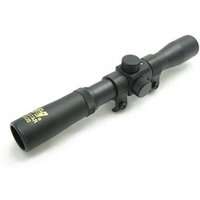
NcSTAR Compact 4x20 Air Gun Rifle Scope, Black, Duplex Reticle - SCA420B
via OpticsPlanet
$12.99

Barska 4X20 Rimfire Rifle Scope, Black Matte AC10730
via OpticsPlanet
$18.99

Daisy Powerline Airgun Scope, 4x15, Crosshair Reticle, Black, 980808-444
via OpticsPlanet
$20.99
Buying Advice
When evaluating any night vision monocular — whether you are identifying a legacy Night Owl unit or shopping for a modern replacement — focus on five core specifications. First, generation (Gen 1, Gen 2, Gen 2+, Gen 3, or digital) determines image quality and low-light sensitivity. Second, objective lens diameter (measured in millimeters) governs light-gathering ability; a 50mm objective collects significantly more photons than a 24mm. Third, magnification matters less than you might think for handheld monoculars — 1x to 5x is the practical sweet spot because higher power amplifies hand shake and narrows your field of view. Fourth, check the type and wavelength of the infrared illuminator (850nm is visible as a faint red glow; 940nm is truly covert). Fifth, resolution is measured in line pairs per millimeter (lp/mm); anything above 36 lp/mm in a Gen 1 device is considered good.
Budget tiers in the night vision monocular market are sharply delineated. Entry-level digital units from brands like Bushnell, Sightmark, and ATN start in the $100 to $300 range and offer basic night observation with onboard IR — perfectly adequate for checking your backyard or scanning a field edge at 75 yards. Mid-tier devices ($400 to $1,200) include better digital monoculars with HD sensors, video recording, and longer IR throw, as well as surplus or refurbished Gen 2 intensifier tubes. Premium night vision ($1,500 to $4,000+) lands you in Gen 3 white-phosphor territory from brands like AGM, FLIR/Armasight, and PVS-14-pattern units — these are what serious coyote and predator hunters mount as clip-ons ahead of a daytime riflescope for true long-range night engagement.
The most common mistake buyers make is confusing digital night vision with intensifier-tube night vision. Digital devices use a CMOS or CCD sensor paired with an IR illuminator — they work well at moderate ranges but suffer from noticeable lag, lower sensitivity in near-total darkness, and limited battery life. True intensifier-tube devices amplify ambient photons through a photocathode and micro-channel plate, delivering real-time imagery with no processing delay. Another frequent error is buying a handheld monocular when the actual need is a weapon-mounted scope or clip-on. A monocular is for observation and navigation; mounting one on a rifle without a proper adapter and reticle system is unsafe and ineffective. If your goal is to shoot hogs at night, invest in a dedicated night vision riflescope or a clip-on unit designed to sit ahead of your existing daytime optic.
For US hunters, matching the device to your specific discipline is critical. Hog hunters in Texas and the Southeast typically engage at 50 to 150 yards from elevated blinds or feeders — a mid-tier digital scope like a Pulsar Digex or an ATN X-Sight 4K paired with an AR-10 in .308 Winchester or an AR-15 in 6.5 Grendel handles this job extremely well. Coyote and predator hunters often need longer detection and engagement distances, sometimes out to 300 yards, making Gen 3 clip-on devices or dedicated thermal scopes like the Pulsar Thermion 2 a better fit. If you simply need to spot and identify game before deciding whether to take a shot, a quality handheld thermal monocular (Pulsar Axion 2 XQ, for example) paired with your existing Vortex, Leupold, or Nightforce daytime scope may be the most versatile and cost-effective solution. Buy from Amazon.com or OpticsPlanet for reliable return policies and warranty support.
The brand landscape for night vision in 2026 is dominated by a handful of serious players. Pulsar (manufactured by Yukon Advanced Optics, a Lithuanian company with a massive US distribution network) leads in both digital night vision and thermal riflescopes, offering excellent build quality and software ecosystems. ATN focuses on affordable smart HD optics with ballistic calculators and rangefinding reticles. AGM Global Vision and FLIR/Armasight cover the Gen 2 and Gen 3 intensifier-tube market for military-grade performance. Traditional daytime optics giants like Vortex, Leupold, Nightforce, and Swarovski do not currently manufacture dedicated night vision monoculars, although Leupold's DeltaPoint line and Nightforce's NX8 platform are popular host optics for clip-on systems. If you are replacing an aging Night Owl monocular, the best modern successors are Pulsar and ATN digital units — they outperform any Gen 1 Night Owl device at comparable or lower price points while adding features Night Owl never offered.
Frequently Asked Questions
How do I identify which Night Owl Optics monocular model I have?
Check the housing near the battery compartment, objective lens ring, or eyepiece collar for a laser-engraved or printed model number — common formats include NONM2, NONM3, NONM4G, NOXM50, and NOXM42. If markings are worn, measure the objective lens diameter in millimeters and note whether the unit has a built-in IR illuminator. Cross-reference these details with archived Night Owl catalogs (the Wayback Machine often has their old product pages). The battery type (AA, CR123A, or CR2) can also help narrow down the model.
I need help identifying a specific scope part name — where do I start?
On any optic, the main external components from front to back are: the objective bell (front lens housing), the turret housing (containing the elevation and windage turrets), the magnification ring or power selector (on variable scopes), the eyepiece or ocular bell, and the diopter adjustment ring. On night vision monoculars specifically, you will also find the infrared illuminator (usually a small projector lens on the front), the gain control knob, and the image intensifier tube housing. Consult your manufacturer's exploded parts diagram or contact their customer service with photos for exact nomenclature.
What is the best scope for hog hunting at night?
For night hog hunting, a dedicated digital night vision riflescope like the Pulsar Digex C50 or ATN X-Sight 5 offers the best balance of performance, features, and price for most US hunters. These units provide built-in IR illuminators effective to 200+ yards, video recording, and ballistic calculators — ideal for AR-platform rifles in .308 Win or 6.5 Grendel from a blind at typical 50-to-150-yard engagement distances. If budget allows, a thermal riflescope like the Pulsar Thermion 2 XP50 Pro eliminates the need for IR illumination entirely and lets you detect hogs through brush and fog.
What is the best scope for coyote hunting at night?
Coyote hunting at night demands longer detection and engagement distances than hog hunting — often 150 to 300 yards across open fields. A Gen 3 clip-on night vision device mounted ahead of a quality daytime scope (like a Nightforce NX8 or Vortex Viper PST Gen II) provides excellent resolution and allows you to use your familiar reticle and turret system. Alternatively, a thermal riflescope such as the Pulsar Thermion 2 LRF XP50 Pro with a built-in laser rangefinder gives you instant range data and heat-signature detection regardless of ambient light. Always verify your state permits night hunting of coyotes before purchasing.
What is the best scope for predator hunting at night overall?
The best all-around night predator hunting setup depends on your budget and target species. For coyotes, foxes, and bobcats, a thermal riflescope in the $2,500 to $5,000 range — such as the Pulsar Thermion 2 XP50 or the ATN ThOR 5 — delivers the most versatile performance across varying terrain and weather. Thermal imaging detects body heat at distances exceeding 1,000 yards for detection and 300+ yards for positive identification, with no IR illuminator to spook wary predators. Pair it with a flat-shooting caliber like .22-250 Rem or .204 Ruger on a bolt-action platform for precision at long range.
Is Night Owl Optics still in business, and can I get replacement parts?
Night Owl Optics has effectively ceased active manufacturing and their official website is no longer maintained. Replacement parts like eyecups, lens covers, and IR illuminator bulbs occasionally surface on Amazon.com, eBay, and surplus optics dealers, but availability is unpredictable. If your Night Owl monocular needs a new image intensifier tube, the cost of a replacement tube typically exceeds the value of the entire unit. In most cases, upgrading to a modern digital night vision monocular from Pulsar, ATN, or Bushnell is more practical and cost-effective than attempting a repair.
What is the difference between night vision and thermal optics for hunting?
Night vision (whether intensifier-tube or digital) amplifies available ambient light or uses an infrared illuminator to produce a visible image — it shows detail, texture, and terrain features but requires at least minimal ambient light or active IR. Thermal imaging detects infrared radiation (heat) emitted by objects, displaying temperature differences as a visual image regardless of ambient light conditions. Thermal excels at detection through fog, light brush, and total darkness, but provides less detail for target identification at extreme range. Many serious predator hunters carry a thermal monocular for scanning and a night vision riflescope for the shot.
Can I mount a Night Owl monocular on my rifle as a scope?
Night Owl handheld monoculars were not designed for weapon mounting and lack a reticle, proper eye relief for recoil management, and any system for holding zero. Mounting one on a firearm is unsafe and will not yield accurate shot placement. If you want to use night vision on a rifle, invest in a purpose-built night vision riflescope or a clip-on night vision device designed to mount ahead of your existing daytime scope. Clip-on systems from FLIR, AGM, and PVS-14 adapters are specifically engineered to handle recoil and maintain zero across calibers up to .308 Win and beyond.
Do I need FFP or SFP in a scope used with a night vision clip-on?
When using a clip-on night vision or thermal device ahead of your daytime riflescope, the reticle choice between first focal plane (FFP) and second focal plane (SFP) still matters. An FFP reticle scales proportionally with magnification, so holdover and windage references remain accurate at any power — this is advantageous if you are ranging or holding over on predators at varying distances. An SFP reticle is only dimensionally accurate at one specific magnification (usually the highest). For dedicated night predator hunting where you may engage at varying ranges without time to dial turrets, an FFP scope paired with an MRAD or MOA Christmas-tree reticle offers the most flexibility.
Related guides
Learn how to swap between a day rifle scope and a night vision scope on the same rifle without losing zero.
Best Optics for Short-Barrel ARs: LPVO vs Prism vs DotFind the best optic for your 10.5"–12.5" AR pistol or SBR. We compare LPVOs, prism sights, and red dots across weight, eye relief…
Barrett MRAD Barrel Swaps: Optics That Hold Zero Every TimeSwapping barrels on your Barrett MRAD? Our 2026 guide covers the best scopes, mounts, and zero-retention strategies so you stay on target across every…
Best Optics for Shooting Beyond 800 YardsFind the best optics for 800+ yard shooting in 2026. Expert guide covers FFP scopes, thermal optics, night vision, spotting scopes…
Not sure which scope is right for you?
Try our AI-powered scope finder — answer a few questions and get personalised recommendations.
Find My Scope →Get a scope tip every day
Follow AiScopes on Facebook for daily buying guides, deals and gear advice.
Follow on Facebook